


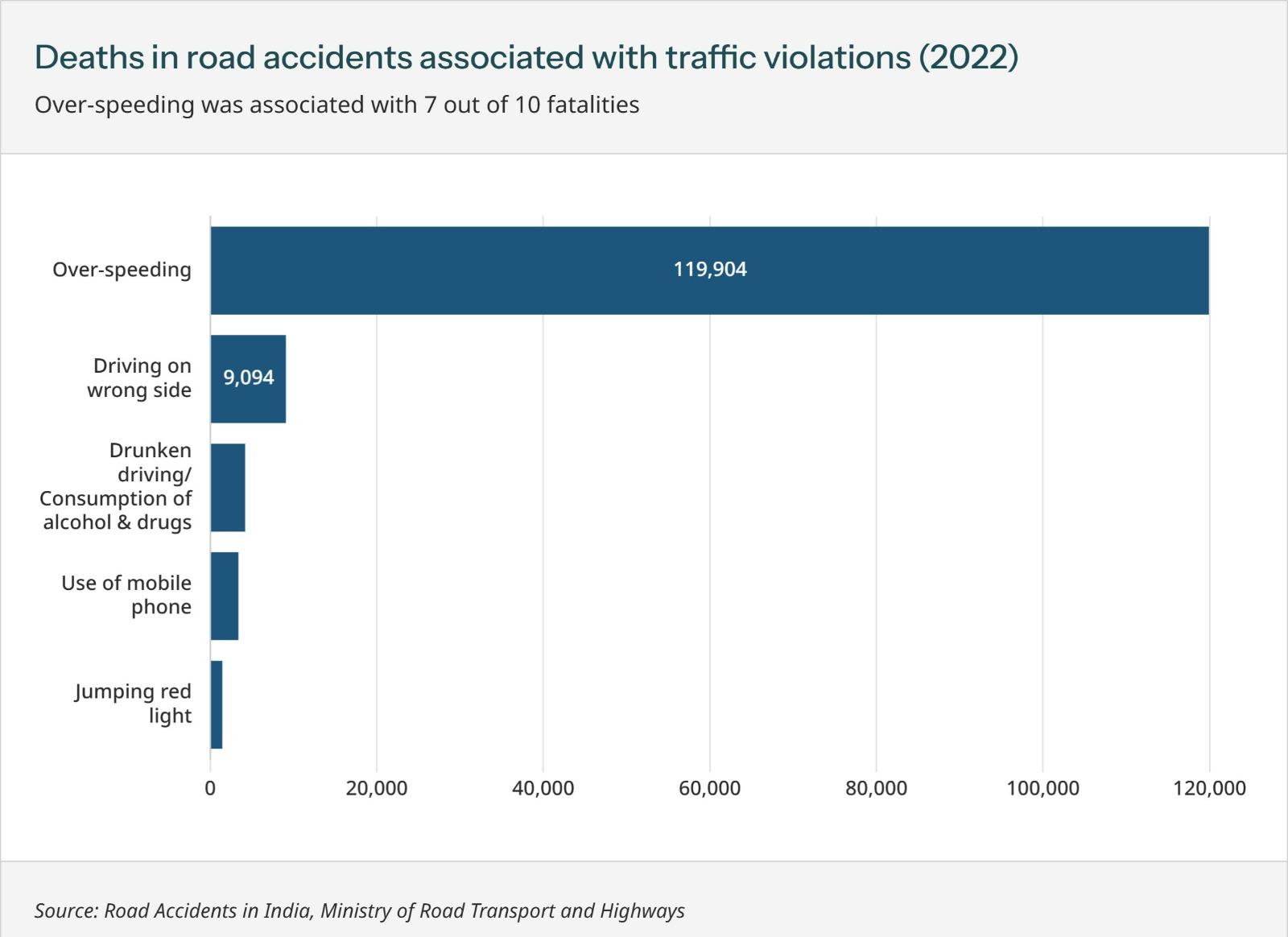
Permanent irreversible damage is the ultimate outcome of RTA (Road Traffic Accidents), not only to the aggrieved individual but also to the immediate ecosystem surrounding them. It manifests as emotional loss, mobility restriction, out-of-pocket healthcare expenditure, and lifelong socio-economic , psychological consequences.
In light of the recent RTA incident involving MBBS students from KMC, Kanker, where a young life was lost, we are reminded that the unrealized potential of an individual human being can never be restored. It is therefore the moral accountability of every citizen to adhere to the laws of the state and promote responsible road behavior. Tagging, a name would remain individual centric but it’s pan india calamity.
Road accidents have emerged as a silent epidemic in India, accounting for nearly 11% of the world’s road accident deaths. In 2022, approximately 29 out of every 1,000 deaths in India were attributed to road traffic accidents, particularly among young adults aged 15–29 years. India currently has nearly 260 million registered two-wheelers and over 50 million cars. Two-wheeler riders account for the highest number of fatalities, contributing to nearly half of all road accident deaths, followed by pedestrians. Proportionate to population, states such as , , and report among the highest accident rates. The has declared the Decade of Action for Road Safety 2021–2030 with a target to reduce road traffic deaths and injuries by at least 50% by 2030.
The viral phrase “zero civic sense” unfortunately reflects the current state of road safety awareness in our society. A holistic and preventive approach towards road hazards is urgently needed. Ethically integrated and practically oriented curricula in schools and colleges must include modules on “How to Survive in the Real World,” emphasizing road discipline, empathy, and responsible civic behavior. Road Safety Weeks should incorporate AI-based simulators along with real-life practical demonstrations and human interaction to improve road safety literacy.
Anger management and behavioral training are highly underrated components of public safety. Society must learn not only how to drive, but also how to behave at traffic signals, during conflicts, and in stressful situations on roads.
I still remember a teenage boy brought to the casualty after an RTA, whose legal age to drive itself was questionable. Yet, he had been allowed by his parents to operate a vehicle. When this concern was rightfully raised, the response reflected the deeper societal problem we continue to ignore. Such incidents are not isolated. Losing a friend during my MBBS days to a road traffic accident still leaves an irreplaceable void — a reminder that some losses never truly heal.
Apart from safety measures, the government should also establish dedicated trauma care centres alongside National Highways (NH), State Highways (SH), and accident-prone regions with limited healthcare access and resources. Such centres would help reduce the burden of unmet emergency healthcare demands and ensure effective and efficient utilisation of the “golden hour,” thereby improving survival rates and reducing long-term disability following road traffic accidents.
Post-trauma care remains a highly underrated aspect of healthcare in our country. There is a significant shortage of psychiatrists, rehabilitation and disability care centres, as well as structured financial support systems for accident survivors and their families. Beyond physical injuries, victims often suffer from long-term psychological trauma, disability, loss of livelihood, and social distress, which require comprehensive multidisciplinary support and rehabilitation.
Although the introduced stricter provisions for road safety and traffic violations, their practical implementation in the public domain remains inconsistent and inadequate. Laws alone cannot prevent accidents unless accompanied by civic responsibility, ethical education, strict enforcement, and collective social accountability.
Road safety is not merely a legal obligation – it is a humanitarian responsibility.
Dr. Amit Banjara
JDA Secretary
Pt JNMMC RAIPUR CHHATISGARH








Leave a Reply