


Raipur, 01/07/2026
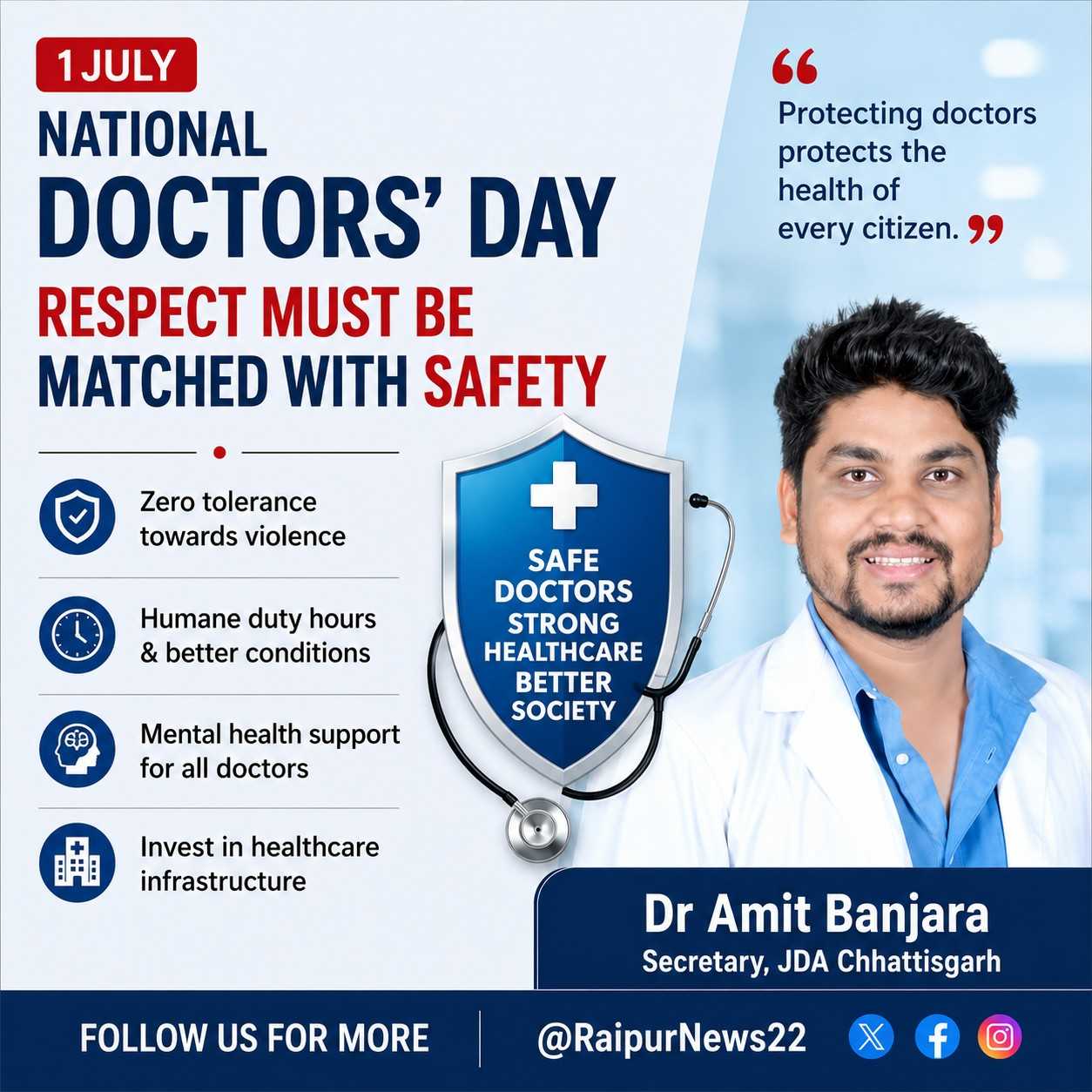
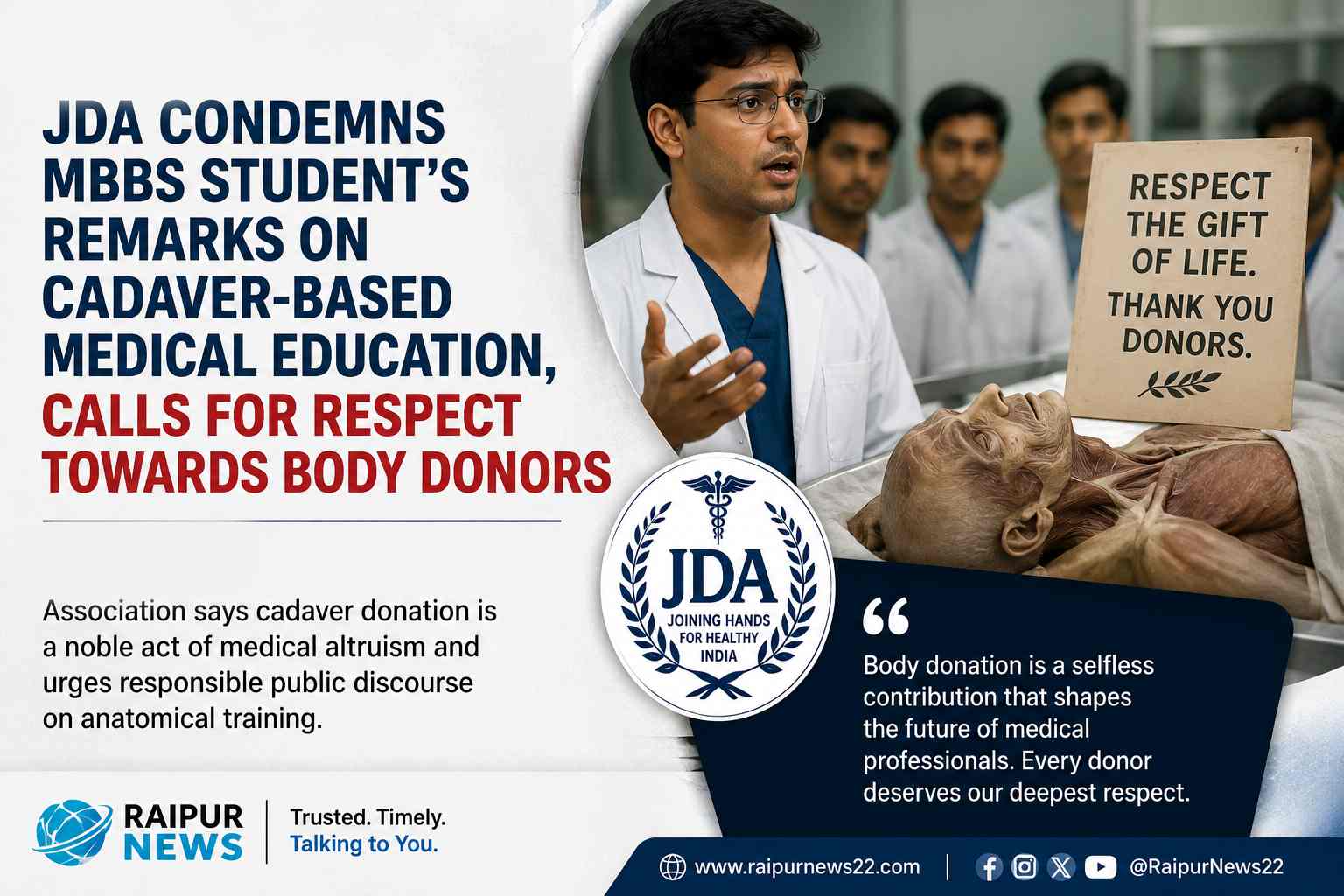
On the occasion of National Doctors’ Day, observed on July 1, the Junior Doctors’ Association (JDA) Chhattisgarh has emphasized that respect for doctors must be accompanied by concrete measures to ensure their safety, well-being, and dignified working conditions.
In a statement issued by JDA Chhattisgarh Secretary Dr. Amit Banjara, it was noted that while Doctors’ Day celebrates the dedication and service of medical professionals, it should also serve as an opportunity to address the growing challenges faced by doctors across the country.
The association highlighted that violence against healthcare workers has become a major concern in India, with studies indicating that nearly 70% of doctors experience some form of workplace violence during their careers. It referred to recent incidents, including the assault on doctors in Koilarjhari (Odisha), violence at a private hospital in Bhanupratappur in Chhattisgarh’s Kanker district, and the Somni-Rajnandgaon case, where action was reportedly initiated against doctors despite following standard operating procedures (SOPs).
According to the statement, overcrowded hospitals, inadequate infrastructure, staff shortages, unrealistic public expectations, poor communication, and systemic shortcomings often lead to verbal abuse, threats, and physical assaults on doctors. Such incidents not only compromise the safety of healthcare professionals but also adversely affect patient care and public confidence in the healthcare system.
JDA Chhattisgarh also drew attention to the challenges faced by resident doctors, who form the backbone of teaching hospitals. Excessive working hours, sleep deprivation, manpower shortages, burnout, toxic workplace environments, and hierarchical bullying continue to impact their physical and mental health despite the provisions of the 1992 Residency Scheme and UGC anti-ragging guidelines.
The association cited National Medical Commission (NMC) data, stating that nearly 27.8% of MBBS students experience psychological disorders, while one in three postgraduate medical students reports suicidal thoughts. Between 2018 and 2022, around 1,270 medical students discontinued their studies, including 153 MBBS students and 1,117 postgraduate trainees. During the same period, 122 medical students died by suicide, comprising 64 MBBS students and 58 postgraduate trainees.
Describing the situation as a serious mental health concern, the association stressed the need for institutional reforms that prioritize mental health support, accessible counselling services, supportive work environments, and humane working conditions.
JDA Chhattisgarh urged governments and healthcare institutions to adopt a zero-tolerance policy against violence in hospitals, strengthen security arrangements, implement reasonable duty hours, improve grievance redressal mechanisms, expand mental health support systems, and invest in healthcare infrastructure. It also emphasized the importance of improving doctor-patient communication and creating public awareness about the limitations of medical science despite technological advancements.
Looking ahead, the association called for long-term structural reforms in the healthcare sector. It advocated for greater involvement of specialist doctors in healthcare administration, policy formulation, and system strengthening to ensure efficient utilization of healthcare resources. It also recommended scientifically integrating the strengths of India’s traditional systems of medicine with evidence-based modern healthcare to develop a more inclusive and sustainable healthcare model.
Concluding the statement, Dr. Amit Banjara said that the true tribute to doctors lies not only in honouring their service but also in safeguarding their dignity, safety, and well-being. He added that protecting healthcare professionals ultimately strengthens the healthcare system, improves patient outcomes, and enhances public trust.










Leave a Reply